Is a Website With No Reviews Safe? What to Check Instead
A website with no reviews can still be safe to use. Zero reviews usually just means the site is new, small, or sells something people don't tend to write about publicly — not that it's a scam. The real question isn't whether reviews exist, it's whether the business behind the site can be verified through other means: who runs it, how long it's existed, how it handles payment and returns, and whether it's reachable if something goes wrong.
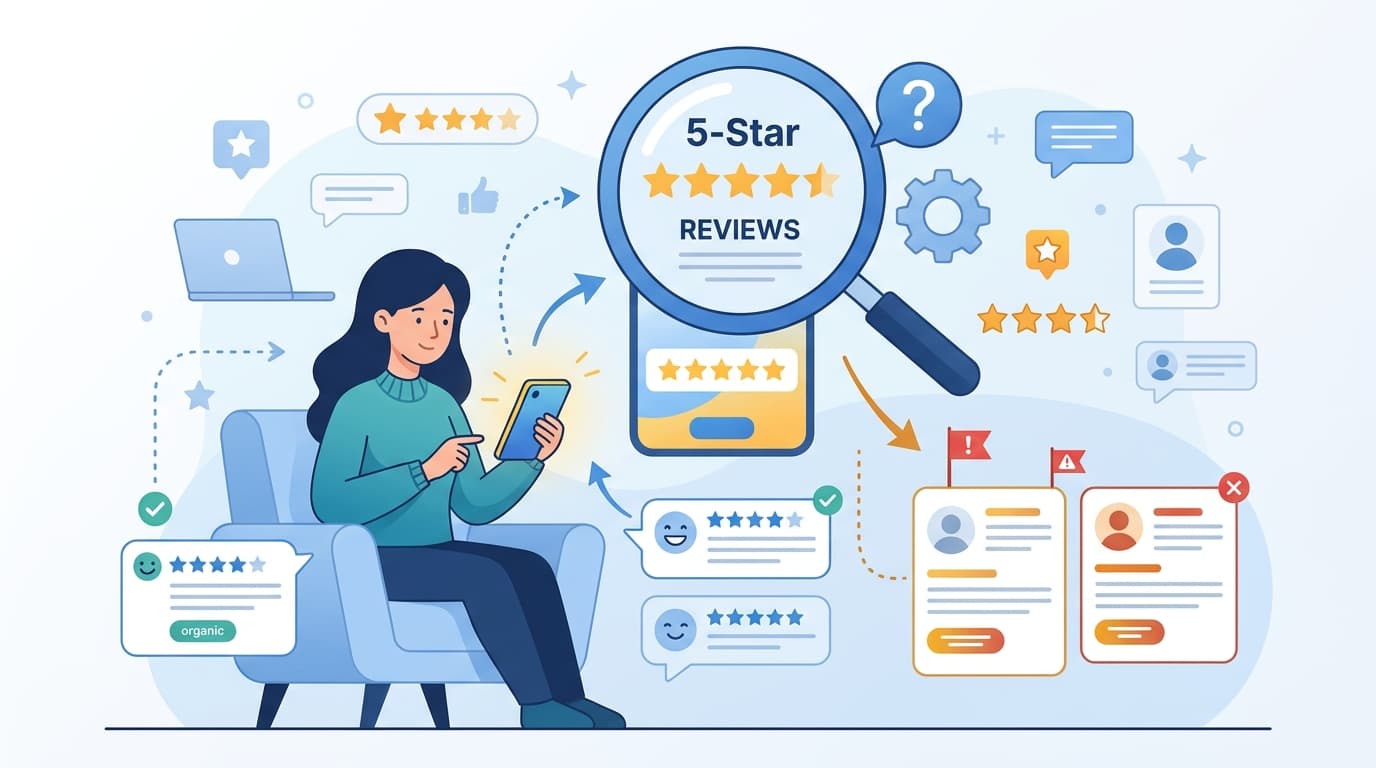
Review counts get treated like a trust score, but they're easy to fake and easy to be missing for honest reasons. A scammer can buy fifty fake five-star reviews for less than the cost of a decent dinner. Meanwhile a legitimate small business that launched three months ago hasn't had time to collect any. Judging a site purely by review volume punishes new honest sellers while letting polished scam sites sail through. Here's what actually tells you more.
Is a website with no reviews safe, or just new?
Start by finding out how old the site actually is. Go to whois.com or icann.org/whois and enter the domain name. Look at the "creation date." A domain registered eight years ago with no reviews is a different situation than one registered six weeks ago with no reviews. The first suggests a business that's operated quietly for years — maybe it sells B2B services, or runs mostly through word of mouth. The second just means it's brand new, which isn't automatically bad, but it does mean you should verify more carefully before spending money.
Check the site through the Wayback Machine too
Go to web.archive.org and paste in the URL. If the site has snapshots going back years and the content, branding, and product lines are consistent over time, that's a real signal of continuity. A site that only appeared in archive snapshots last month, paired with a domain registered last month, is worth more scrutiny — not condemnation, just more homework before you buy.
What should I look at instead of star ratings?
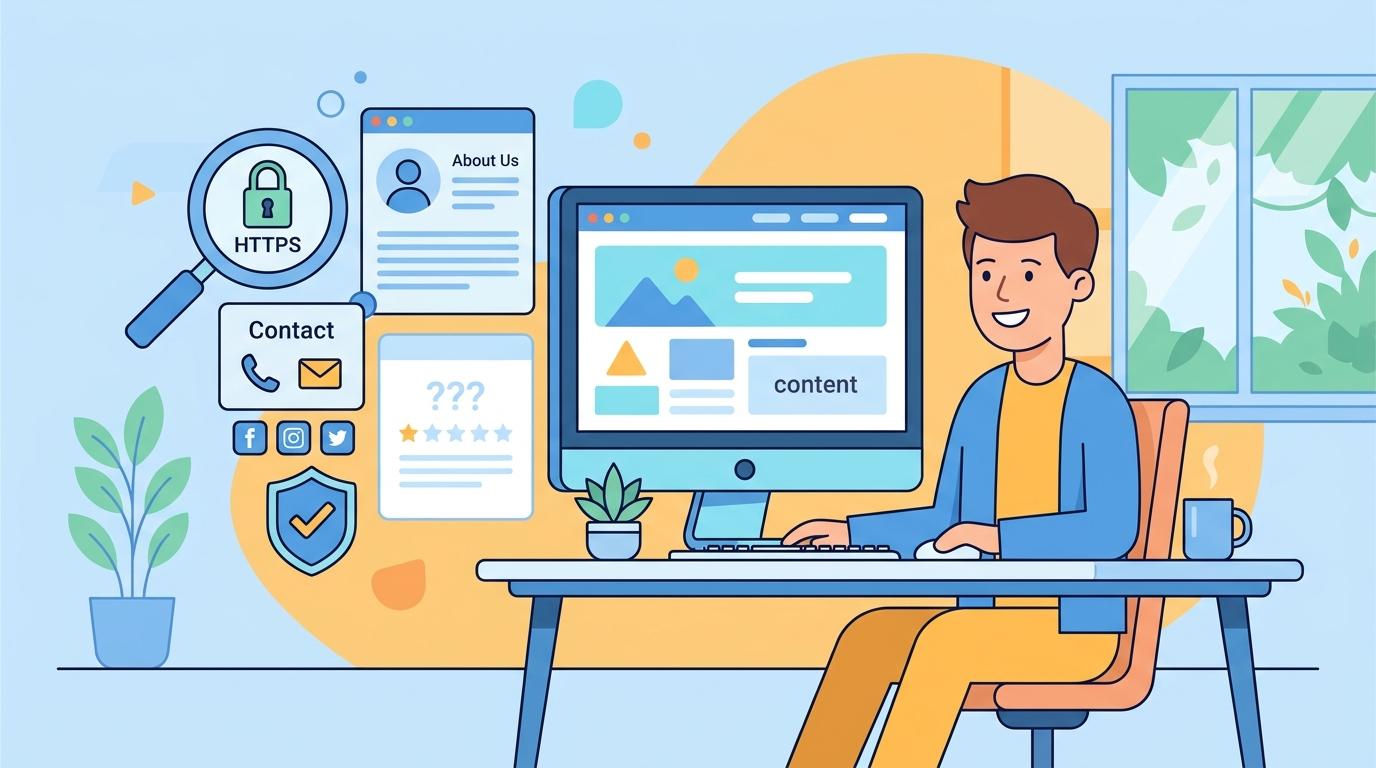
- A real street address and phone number. Check the address on Google Maps. Is it an actual office, warehouse, or storefront, or does it come up as a residential building or an empty lot? Call the phone number if one is listed and see if someone answers or if it rings dead.
- A working return and refund policy. Read it fully. Vague policies ("contact us for returns") with no timeframe, no address to ship items back to, and no conditions are a weaker sign than a specific, detailed policy.
- Payment options. Legitimate stores typically offer credit card processing through known providers (Stripe, PayPal, Shopify Payments) or standard card networks. If a site only accepts wire transfer, cryptocurrency, or gift cards for a retail purchase, that's a serious red flag regardless of reviews.
- Company registration. In the US, check the state's Secretary of State business search for the company name. In the UK, check Companies House (gov.uk/government/organisations/companies-house). A registered entity with a filing history is independently verifiable, and reviews can't tell you that.
- Contact beyond a contact form. Look for a named person, a support email that isn't a free Gmail address, or a LinkedIn page for the founder or team. Sites run by real identifiable people are generally lower risk than ones hiding behind anonymous forms.
How do I check if a site's SSL certificate and domain are legitimate?
Click the padlock icon in your browser's address bar and check the certificate details — this tells you the connection is encrypted, not that the business is trustworthy, but a missing or expired certificate on a site asking for payment info is a real problem. Separately, look at the domain extension and spelling. A site pretending to be a known brand but using a slightly altered domain (like "amaz0n-deals.com") is a classic sign of impersonation, independent of any review situation.
Cross-check the business name outside the site itself
Search the exact business name plus words like "complaint," "scam," or "reddit" in a search engine. Check the Better Business Bureau (bbb.org) if it's a US-based company. A site with zero on-site reviews but no complaint history anywhere else online is a much safer bet than one with zero reviews and multiple scam reports on forums or Reddit threads.
When should I actually be cautious about a site with no reviews?
Treat the absence of reviews as a yellow flag — not a dealbreaker, but a reason to look closer — when it's combined with other weak signals:
- The domain was registered within the last few weeks
- Prices are dramatically lower than every competitor for the same product
- There's no verifiable address or the address doesn't match a real location on street view
- The only payment method is bank transfer or crypto
- Product photos appear identical to listings on other unrelated sites (reverse-image search them with Google Images or TinEye)
- There's urgency pressure — countdown timers, "only 2 left," pop-ups pushing you to buy immediately
Any one of these alone isn't proof of a scam. Several of them stacked together, on a site with no outside verification and no reviews, is a real reason to walk away or pay with a credit card that offers chargeback protection rather than a method with no recourse.
What's a reasonable way to test a new site before committing?
If everything checks out but you're still unsure, start small. Order the cheapest item, or use a free trial if one's offered, before putting significant money in. Pay with a credit card rather than a debit card or bank transfer — credit cards give you a formal dispute process if the item never arrives. Keep screenshots of the product page, price, and policy at the time you ordered, in case you need to reference them later.
Reviews are one data point among many, and on a brand-new site they simply won't exist yet. What matters more is whether the business is verifiable through records that exist outside the website's own control — domain history, business registration, a real address, and a payment system that gives you a way to get your money back if things go wrong.
Frequently Asked Questions
Does having zero reviews automatically mean a website is a scam?
No. It usually just means the site is new, small, or sells something customers don't typically write public reviews about, like B2B services. Scam sites often have plenty of fake reviews, while honest new businesses simply haven't had time to collect any yet.
How can I check how old a website's domain actually is?
Go to whois.com or icann.org/whois, enter the domain name, and look at the listed creation date. A domain that's eight years old with no reviews suggests a quietly operated, legitimate business, while one registered just weeks ago means you should verify more carefully before buying.
What does the Wayback Machine tell you about a site's trustworthiness?
Visiting web.archive.org and entering the URL shows historical snapshots of the site. If branding, content, and product lines have stayed consistent over several years, that's a strong signal of real continuity, whereas a site that only appears in snapshots from last month warrants extra scrutiny.
Which payment methods on a site should raise red flags?
Legitimate retailers usually process payments through recognized providers like Stripe, PayPal, Shopify Payments, or standard credit card networks. If a site only accepts wire transfers, cryptocurrency, or gift cards for a retail purchase, that's a serious warning sign regardless of its review count.