The Future of Social Networking: Old Platforms vs New Web Model
The Future of Social Networking: Old Platforms vs New Web Model
The Evolution of Social Networking: Why the Old Model is Breaking
For the past two decades, social networking has completely redefined how humanity communicates. It brought us closer to distant relatives, helped us discover niche communities, and gave everyone a global megaphone. But if we look closely at the digital landscape today, a massive shift is occurring.
The traditional social networking model the one built by the early tech giants is beginning to show its age. Users are feeling increasingly isolated, algorithms are prioritizing ads over friends, and the web has become highly fragmented.
Let's dive deep into the pros and cons of the legacy social networking platforms you know and love, explore why a paradigm shift is necessary, and introduce the new, decentralized model of "social browsing network" that is tearing down the digital walls.
The Traditional Social Networking Model: Pros and Cons
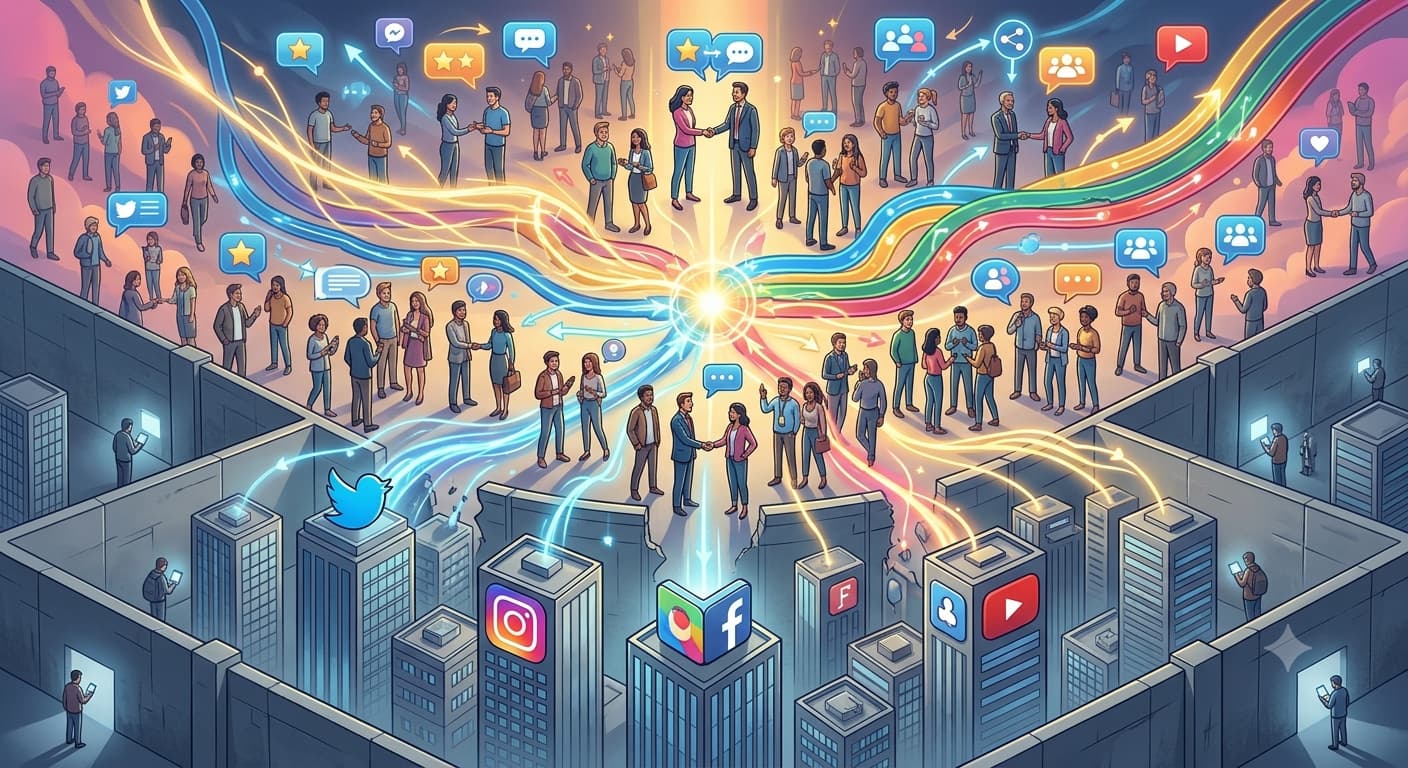
When we think of social networking, we usually think of destination websites. You open a specific app or URL, and you stay inside that "walled garden" to interact with others.
The Pros of the Old Model
- Massive Scale: Traditional platforms have billions of users, making it incredibly easy to find old friends or reach a massive global audience if you are a creator or business.
- Algorithmic Discovery: Love it or hate it, platforms like TikTok and Instagram have mastered the art of learning what you like and serving you endless streams of highly targeted entertainment.
- Centralized Profiles: It provides a single digital identity (like a digital resume on LinkedIn or a visual diary on Instagram) where people can learn everything about you in one place.
The Cons of the Old Model
- The "Walled Garden" Effect: This is the biggest flaw in traditional social networking. If you are reading a great article on a news site, you cannot discuss it there. You have to copy the link, leave the website, and paste it into Facebook or X. You are constantly forced to leave the content just to talk about the content.
- Echo Chambers: Algorithms are designed to keep you scrolling, which means they often only show you opinions you already agree with, limiting healthy, open debate.
- Corporate Control: The platform owners dictate the rules, censor content, and control your data. The community has very little power over the actual digital space.
The Giants of Traditional Social Networking
Despite their flaws, these platforms paved the way for the digital era. As part of our mission to bring transparency to the web, you can now rate and review every single one of these legacy platforms directly on Friank!
Here is a comprehensive list of the biggest social networking websites in the world. Click any link to visit their official Friank community profile, drop a star rating, and chat live with other users:
- Facebook: The pioneer of modern networking, heavily focused on real-world connections and community groups.
- X (formerly Twitter): The global town square for real-time news, politics, and rapid-fire opinions.
- Instagram: The visual heavyweight, driving influencer culture and aesthetic brand building.
- TikTok: The viral engine of the internet, dominating short-form video and trend creation.
- Pinterest: The ultimate digital vision board for planners, shoppers, and creatives.
- LinkedIn: The undisputed king of B2B networking, career growth, and corporate communication.
- Reddit: The front page of the internet, driven by anonymity and highly specific, niche forums.
- YouTube: The world's premier video network, blurring the lines between search engine and social community.
- Snapchat: The pioneer of ephemeral, disappearing messaging for close-knit friend groups.
- Discord: Evolving from gaming into massive, organized voice and text servers for global communities.
- WhatsApp: The global standard for private, encrypted, direct messaging.
- Twitch: The live-streaming powerhouse, creating real-time interaction between creators and massive audiences.
The New Era: The Social Browsing Model (Friank)
The internet wasn't meant to be divided into five or six giant, isolated apps. The entire web should be social. This realization birthed the new model of social networking: Social Browsing, pioneered by Friank.
Instead of going to a specific social media site to talk, Friank acts as a universal social layer over the entire internet. You simply browse the web normally, and Friank allows you to chat live and leave reviews on any URL you visit.
The Pros of the New Model (Friank)
- Ultimate Context: You are talking to people who are looking at the exact same webpage as you, at that exact moment. You don't need to share a link; the context is already there.
- Instant Consumer Protection: If you are on a scamy e-commerce site, the Friank community will warn you via live chat and reviews before you spend your money. Old social networking sites cannot protect you dynamically like this.
- Breaking the Walls: Every single website, blog, and online store instantly becomes a vibrant community. The web is unified into one massive, open conversation.
- True Freedom: Website owners cannot delete your Friank reviews or silence your live chats. The community owns the conversation, not the corporation.
The Cons of the New Model
- Building a New Habit: Because this is a revolutionary way to experience the web, users have to learn a new behavior. We are so used to switching apps to talk that chatting directly on the page takes a moment to get used to.
Experience the Future Today
Traditional social networking will always have a place for checking in on family or curating a professional resume. But for exploring the web, discovering the truth behind websites, and meeting people with your exact, real-time interests, the old model is obsolete.
Stop browsing alone and trapped in walled gardens.